AWS Step Functions: Overview and Problem Solving
AWS Step Functions is a serverless orchestration service that enables you to build complex workflows by integrating various AWS services. It allows developers to coordinate multiple microservices and manage the state of long-running workflows without worrying about infrastructure management.
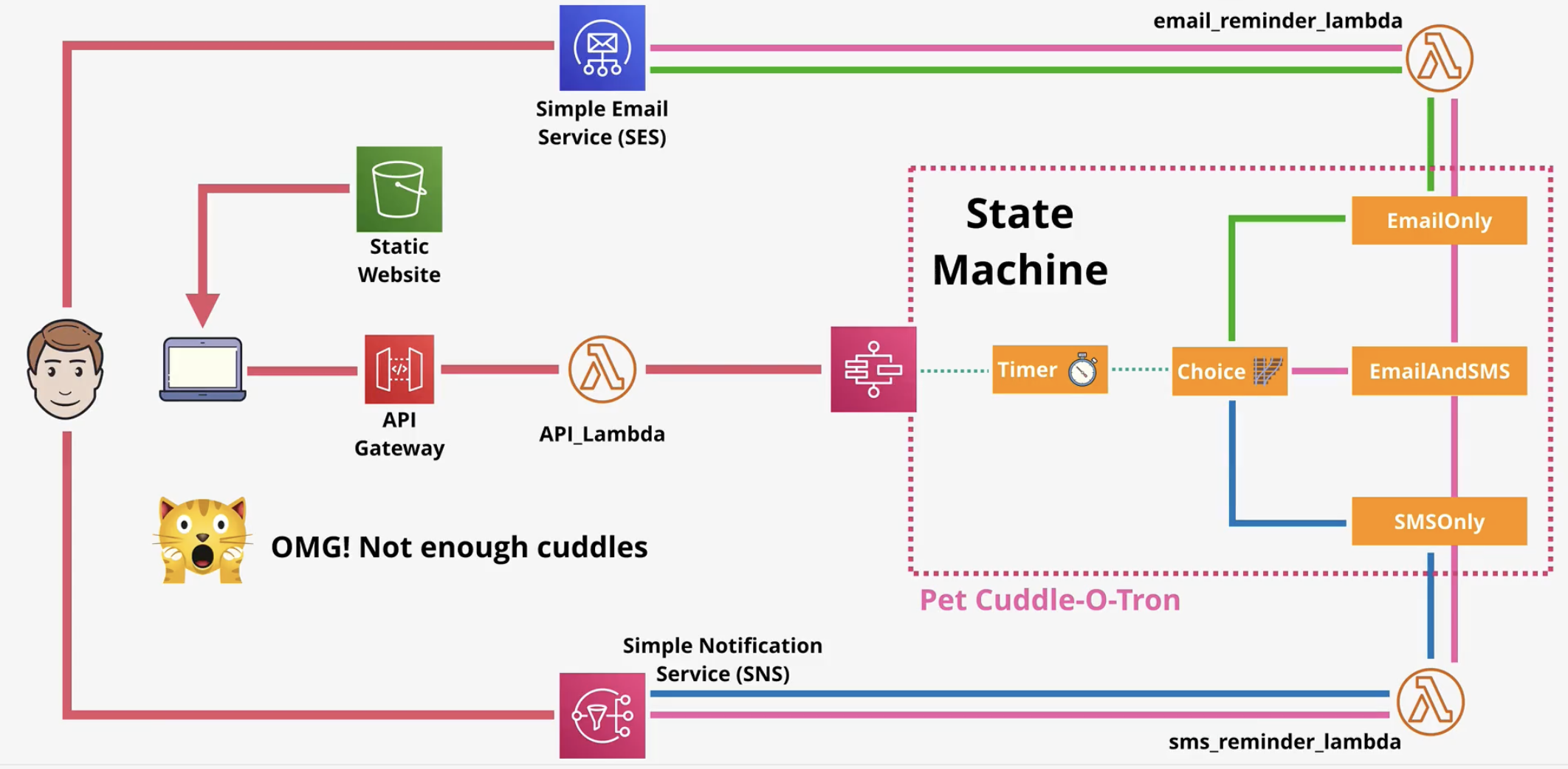
Why Do We Need Step functions?
While AWS Lambda is a powerful service for executing code in response to events (Function as a Service or FaaS), it has limitations that AWS Step Functions addresses:
- Execution Duration: Lambda has a maximum execution time of 15 minutes, making it unsuitable for long-running processes. Step Functions can handle workflows that last up to one year.
- State Management: Lambda functions are stateless, meaning they do not maintain any information between invocations. Step Functions provide built-in state management, allowing for complex workflows with multiple states.
- Complexity in Chaining: As workflows grow, chaining multiple Lambda functions can lead to complex and difficult-to-manage code. Step Functions simplify this process by providing a visual workflow model, making it easier to manage and visualize the entire workflow.
- Error Handling and Retries: Step Functions offer robust error handling and retry mechanisms that can be configured for each state, reducing the need for custom error management in Lambda.
- Workflow Flexibility: Step Functions support different execution patterns (e.g., parallel execution, branching with choices), which are challenging to implement with Lambda alone.
State Functions: Structure and Components
AWS Step Functions operate based on a clear structure:
- Workflow Lifecycle: The workflow progresses through a series of steps: START → STATES → END.
- States: States represent the various tasks and conditions in your workflow. They can include different types of tasks, such as invoking Lambda functions, waiting for a specific duration, or making choices based on input.
Types of States
- SUCCEED & FAIL: Indicates the success or failure of the workflow.
- WAIT: Delays the next state for a specified duration.
- CHOICE: Adds branching logic to the workflow, allowing different paths based on conditions.
- PARALLEL: Executes multiple states simultaneously.
- MAP: Allows for the processing of multiple items in a collection, iterating over them in parallel.
- TASK: Represents a single unit of work, which can invoke various AWS services such as Lambda, DynamoDB, ECS, SNS, SQS, Glue, SageMaker, EMR, and Step Functions themselves.
Additional Features
- Workflows: There are two types of workflows:
- Standard Workflows: For long-running, durable workflows that can be executed and tracked.
- Express Workflows: For short-duration, high-volume workflows that require lower latency.
- Integration: Step Functions can be initiated through multiple AWS services, including API Gateway, IoT Rules, EventBridge, and Lambda.
- Amazon States Language (ASL): Workflows are defined using ASL, a JSON-based language that outlines the states, transitions, and logic of your workflow.
- IAM Role: An IAM role is used to manage permissions for the various services involved in the workflow.